Creating Wellbeing Even in Humid Environments
Keyword: comfort.
It is around this concept that the most recent trends and innovations in living spaces have evolved, whether in furniture, architectural solutions, lighting, finishes or materials. Every element is required to meet precise functional and performance standards, as well as aesthetic ones, in order to ensure a long-lasting environment of wellbeing for its occupants.
These needs become even more relevant in humid environments, where the presence of water vapour, condensation and potential infiltration can increase surface deterioration and encourage the growth of mould and bacteria.
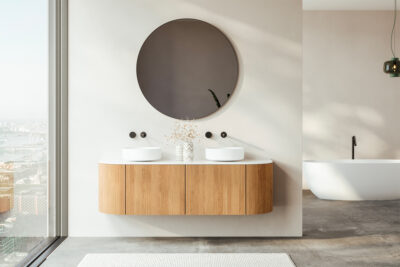
Spaces such as bathrooms, saunas, laundries and swimming pools therefore require specific solutions to maintain their quality and healthiness over time. These are precisely the environments dedicated to physical and mental wellbeing, where comfort and air quality must remain constant.
CAP Arreghini solutions are designed to respond to these conditions, transforming wall surfaces into functional elements that actively support indoor environmental quality.
The proposed systems ensure the right balance between waterproofing and wall breathability, thanks to paints formulated with advanced technologies. These products prevent the proliferation of mould, bacteria and fungi on interior surfaces, while counteracting stains, odours and material deterioration.
The resulting benefit is twofold: on one hand improved healthiness and air quality, and on the other the long-term aesthetic durability of walls, which become more resistant even in conditions of high humidity.
Prevention to Ensure a Healthy Environment
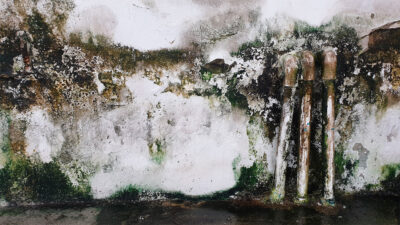
CAP Arreghini anti-mould solutions perform both preventive and restorative functions. In environments characterised by high humidity, poor ventilation or risk of infiltration, CAP Arreghini paints act as protective barriers, promoting breathability and water repellence. They are based on innovative formulations that reduce surface condensation and limit mould growth.
Included in this offering are the Active paints from the Sanacap line, which contain a concentrated fungicidal solution that counteracts the formation of fungi and algae, with a broad spectrum of action.
For Every Need
The Sanacap range addresses different design and application needs, from room type and size to installation requirements, helping prevent and solve problems related to mould growth.
Part of the line is Gradiente Active, a thermal-insulating water-based paint specifically designed to counteract condensation and mould formation.
Also included is Sana Active, a washable paint with long-lasting sanitising and anti-mould properties, ideal for large spaces where it also offers anti-reflective performance.
Other solutions include My Weiss Active, a washable water-repellent paint with excellent coverage and outstanding whiteness. 2000 Tix Active, a highly breathable, anti-drip water-based paint with specific anti-mould properties.
Capwhite Active, a particularly breathable anti-mould paint that protects walls in humid and poorly ventilated environments.

Giving Surfaces a Second Life
Paints from the Sanacap line are equally effective in eliminating existing mould and protecting surfaces against its recurrence. Within a sanitising cycle, the combination of multiple solutions allows deep intervention and ensures long-lasting protection.
The process begins with the removal of mould from walls using the B1 anti-mould wall sanitiser, an aqueous solution based on fungicides selected for its broad-spectrum effectiveness against different mould species. This is followed by the application of two coats of paint, using Active products from the Sanacap line.
Surfaces are thus regenerated, restored to high performance and able to contribute to maintaining a healthy and comfortable indoor environment.
Supporting Design in Complex Environments
Through these solutions, CAP Arreghini supports designers and professionals by integrating advanced technical expertise with creative sensitivity. In complex environments, particularly those that are humid or exposed to critical conditions, design choices require careful evaluation of multiple factors: material performance, long-term durability, substrate compatibility, economic sustainability and the aesthetic quality of the final result.
In such contexts, the risk of compromise solutions is high. For this reason, an approach based on careful planning and continuous dialogue between designers and specialised technicians becomes crucial. Preventive analysis of environmental conditions, combined with the informed selection of the most suitable application cycles, makes it possible to prevent future issues and ensure results that are reliable and consistent with the design concept.
The true value of project support lies in the ability to transform complexity into opportunity: technically high-performing solutions that do not sacrifice aesthetics, ensuring durable, functional interventions of high qualitative standards.