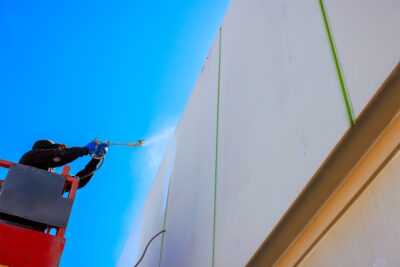
To every project, its application system
Every project requires paint, but not every paint is suitable for every type of project. Each substrate has its own specific characteristics: it may be new or existing, uniform or deteriorated, internal or external, and so on. Each of these variables calls for specific application systems that provide the most appropriate solution depending on the objective—whether performance, durability, resistance or simply aesthetics.
A universal approach is no longer viable: the sector demands specialisation and vertical expertise to ensure effective, long-lasting results.
For this reason, we refer to application systems rather than simply paints. An application system represents a complete and reliable solution within the project framework. Let’s explore why—and how to leverage its full potential across different contexts

Why the application system outperforms the product
Today, the focus is no longer on finding the “best product”, but the most reliable solution. This principle underpins CAP Arreghini’s approach: not just individual paints, but integrated systems engineered for specific application contexts.
This shift is driven by the evolving nature of construction and renovation. Projects now involve complex stratigraphies, often pre-existing, where every decision impacts the overall performance of the building. Stricter regulations, increasing attention to energy efficiency and durability, widespread adoption of external insulation systems, and increasingly complex substrates all contribute to this transformation.
A single product is no longer sufficient to guarantee results. In contrast, a paint system provides a coherent framework, ensuring greater predictability of the final outcome.
At the same time, the structure of the supply chain has evolved. Multiple stakeholders are involved in any given project, and the paint system becomes both a coordination tool and a technical guideline, enabling consistent execution while reducing errors and conflicts.
The market itself is also driving greater professionalisation. As complex projects increase, so does the demand for specialised expertise. Working with systems allows professionals to create value, differentiate their offering, and position themselves as technical partners.
Moreover, compared to standalone products, paint systems deliver superior performance in critical conditions such as mould, moisture, surface degradation, or micro-cracking—situations where a single coat is insufficient. A system includes a technical assessment of the substrate and addresses the issue holistically.

Which system is the right one?
Selecting the appropriate system always starts from a key principle: there is no universally correct solution—only the most coherent one for a given context.
Multiple variables must be considered. The process always begins with substrate analysis, the essential first step. A new substrate—uniform and stable—offers greater design flexibility. An existing one, especially if deteriorated or heterogeneous, requires structured interventions to resolve underlying issues.
The presence of “pathologies” such as moisture, mould, salts, or micro-cracks calls not for a simple finish, but for a comprehensive treatment that addresses the root cause.
Environmental context is equally critical. Interior and exterior applications have fundamentally different requirements. External systems must withstand weathering, UV exposure, driving rain, while maintaining breathability. Internally, focus shifts to indoor comfort, moisture regulation, and air quality.
Factors such as building exposure, ventilation, and local microclimate directly influence system selection.
Project objectives must also be defined: aesthetic enhancement, durability, reduced maintenance, or technical performance. Each system carries specific value propositions beyond substrate compatibility.
Finally, on-site variables play a decisive role. Application methods, contractor expertise, timelines, and operational conditions can influence system selection as much as technical criteria. A theoretically perfect system must also be practically applicable—otherwise, it loses effectiveness.
The choice of paint system is therefore the result of a comprehensive evaluation: substrate, pathologies, environment, required performance, and application conditions. A 360-degree assessment to which CAP Arreghini responds with both advanced systems and full technical consultancy

CAP Arreghini’s complete range
CAP Arreghini positions itself as the ideal technical partner for designers and professionals, supporting them in selecting the most suitable system through a comprehensive portfolio developed in its in-house Research & Development Laboratory.
For exterior surfaces, the company offers facade systems (acrylic, siloxane, elastomeric), ideal for buildings—including heritage and high-value properties—seeking to preserve both aesthetics and long-term performance under severe weather conditions, while minimising degradation risks.
For external insulation, CAP Arreghini provides systems compatible with ETICS, contributing to energy efficiency and durability by managing thermal expansion and ensuring breathability.
In interior environments, application systems are equally diverse and effective, addressing both performance and aesthetic requirements:
- standard systems (white and coloured) for continuous, elegant finishes;
- technical systems targeting issues such as mould and enhancing wall breathability;
- decorative systems (textured, lime-based, special effects) that add character and customisation, recreating natural, layered, or tactile surfaces—ranging from sandy, glossy or matt finishes to soft-touch effects and more.
To address common indoor moisture issues, CAP Arreghini has developed dehumidifying systems specifically designed for rising damp, restoring the substrate’s hygrometric balance.
Finally, multi-surface systems are designed for wood, metal, and complex substrates, ensuring both durability and aesthetic consistency across different materials.
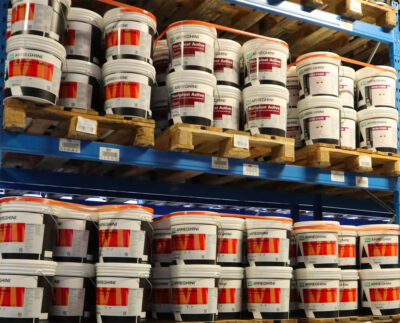
Common mistakes
Choosing the wrong system inevitably leads to underperforming results, requiring further maintenance and increased costs.
The most common mistake is adopting an oversimplified approach—treating the product as an immediate solution, confusing coverage with problem resolution (e.g. masking mould or stains), or selecting based solely on price. This typically stems from inadequate substrate analysis, the most frequent error.
Underestimating degradation, moisture, or relying on “universal” products often leads to recurring issues over time.
Another critical mistake is neglecting compatibility between layers. Using products of different chemical nature without verifying interaction can result in adhesion problems, surface tension issues, or inconsistent breathability.
Failing to adapt the system to real site conditions is equally problematic. Tight deadlines, varying skill levels, and non-ideal environmental conditions must all be considered. A system must be realistically applicable to be effective.
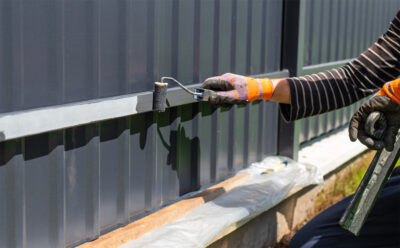
Technical checklist
- Start from the substrate
Assess absorption, cohesion, and surface condition. If the substrate is unstable, any system is at risk. - Identify issues before selecting products
Moisture, mould, salts, and micro-cracks must be analysed and addressed prior to defining the finish. - Never skip preparation
Cleaning, consolidation, and priming are integral parts of the system—not optional steps. - Define the project objective
Durability, aesthetics, maintenance, or technical performance? The system must align with the project’s priorities.